A Typical Singaporean Life Journey: Are You Investing Right For Your Risk Level?

.png)
A Typical Singaporean Life Journey
Understanding a typical life journey will allow you to make personal finance decisions based on the stages of which you are at.
A typical Singaporean life journey starts when you were born and ends when you die (you don't say).
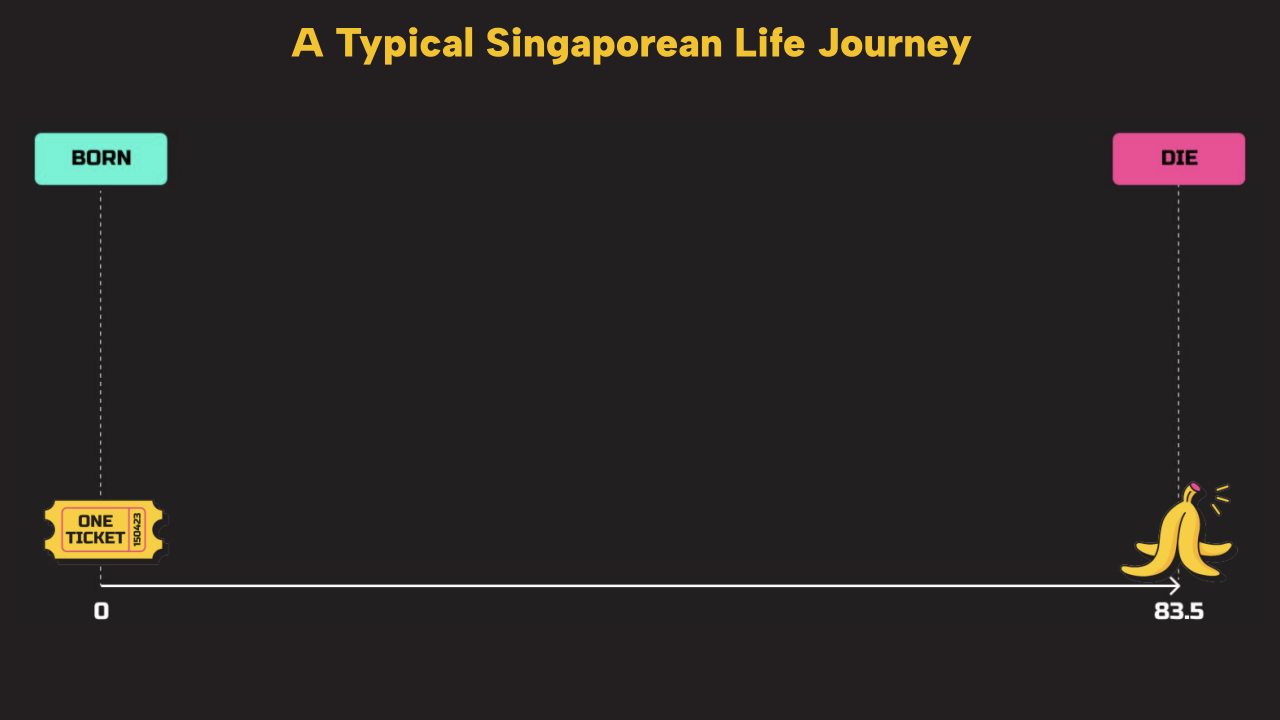
The typical life expectancy is 83.5 years old, so you have about 83.5 years to live your life. That is about 2,619,227,016 seconds, and every second counts.
.png)
Singapore's minimum retirement age is 64 years old, with the re-employment age at 69 years old.
In this case, we will use 65 as the age to aim towards because with the monthly CPF payout, you get to "retire" with a bit more peace.
For some of us, retirement can come a little early (if we are lucky enough).
.png)
For the rest of us, in between the day we were born, to the day we die, our life journey consists of major milestones such as
- Receiving education
- Getting a career
- Starting a family
- Buying a home
While most of us assume that we have a lot more years to enjoy retirement, the Singaporean's average healthspan is only till the age of 74.2 years old.
.png)
Healthspan is the number of years we get to spend in good health, free from major diseases, cognitive decline, and major disabilities.
In short, you get to enjoy retirement properly till the age of 74.2 years old.
.png)
Age vs Life Stage vs Risk Profile
Your investment risk profile is multi-dimensional. Every investor's situation is different.
Your investment risk profile is determined by
- Your age
- Your life goals (both short-term and long-term)
- Your life stage
- Your savings
These factors will then affect
- Your expectations on your investment return
- Your risk appetite
- Your liquidity requirements
Most investors would have kicked off their investment journey without understanding their risk profile. Failure to do so at the start will result in you possibly building a portfolio that may not be optimised for your risk preference.
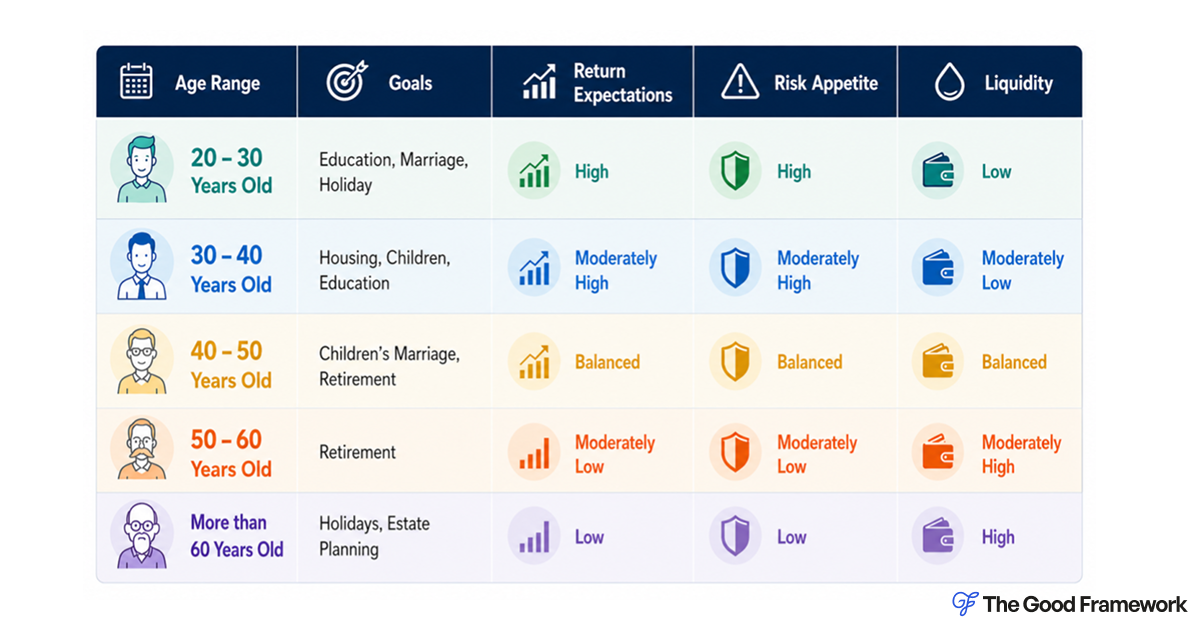
Here's a framework to help you visualise better.
Return expectations refer to the returns you can aim for at various life stages. Do take note that with every increase in return expectations, you are actually taking on more risk. This is the main reason why we look to take on more risk when you are younger, so that you have more time to recover any of those losses.
Our risk appetite allows us to understand the amount of riskier investments we can take on, while liquidity requirements dictate how much liquidity you need at various life stages.
Liquidity, refers to how much money you can get your hands on within a short period of say, one month.
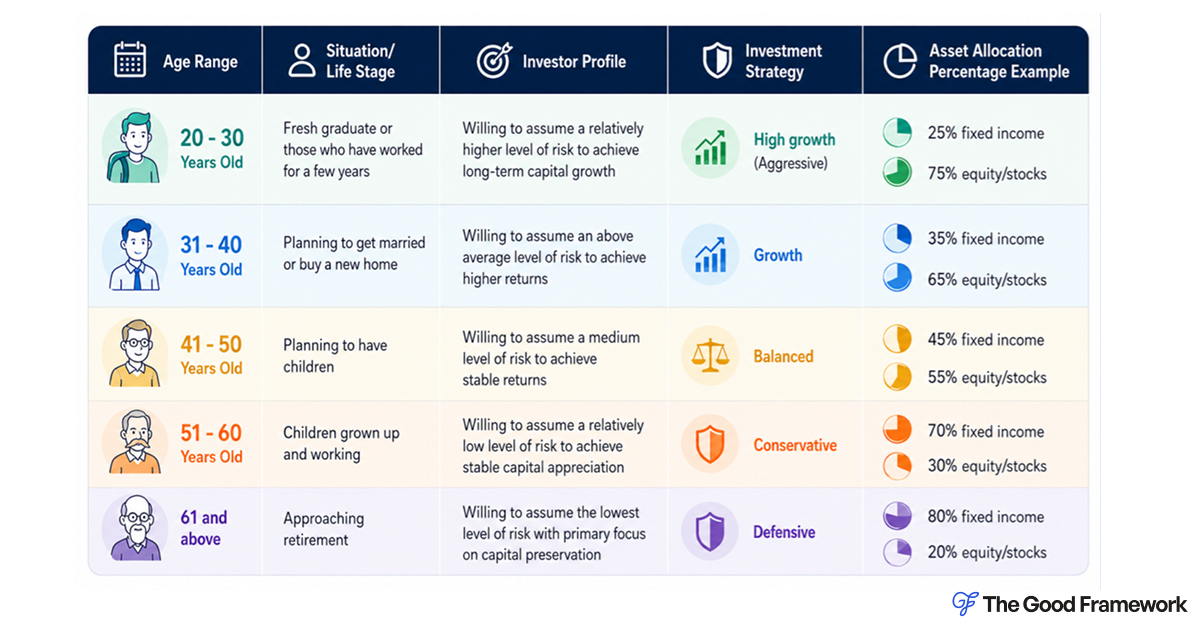
The Simple Guideline to Portfolio Allocation
(110 - Your Age) = The Percentage of Your Portfolio that Should be in Equities
Finding out how much of your portfolio should be allocated in equities is not rocket science.
Simply subtract your age from 110, that is the percentage of your portfolio that you should consider investing in equities or riskier assets.
As for the remaining percentage, you can consider allocating them in safer assets such as bonds.
Here are some examples on how you can allocate your portfolio:
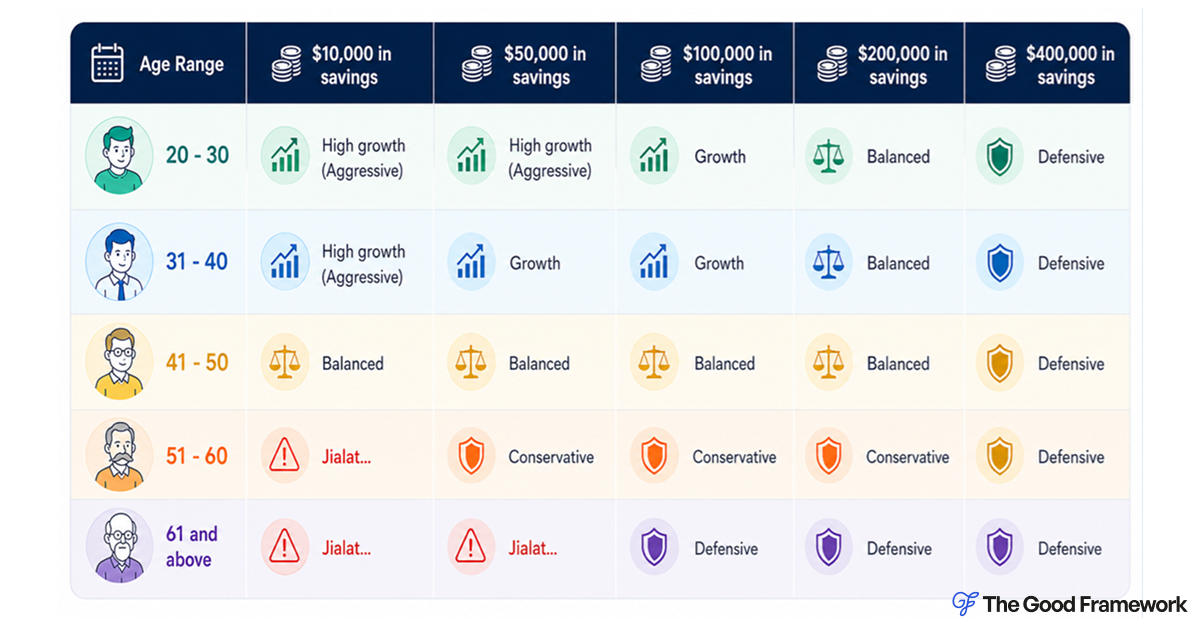
If you are lucky enough have a head start in life in terms of savings, here's how you can look to adjust your risk preference accordingly.
While it is always exciting to be deep-diving into your investment journey, having the right mindset and understanding of your risk preference can help you determine the right framework into investing.